Two machines players can understand at a glance—and two very different operating models.
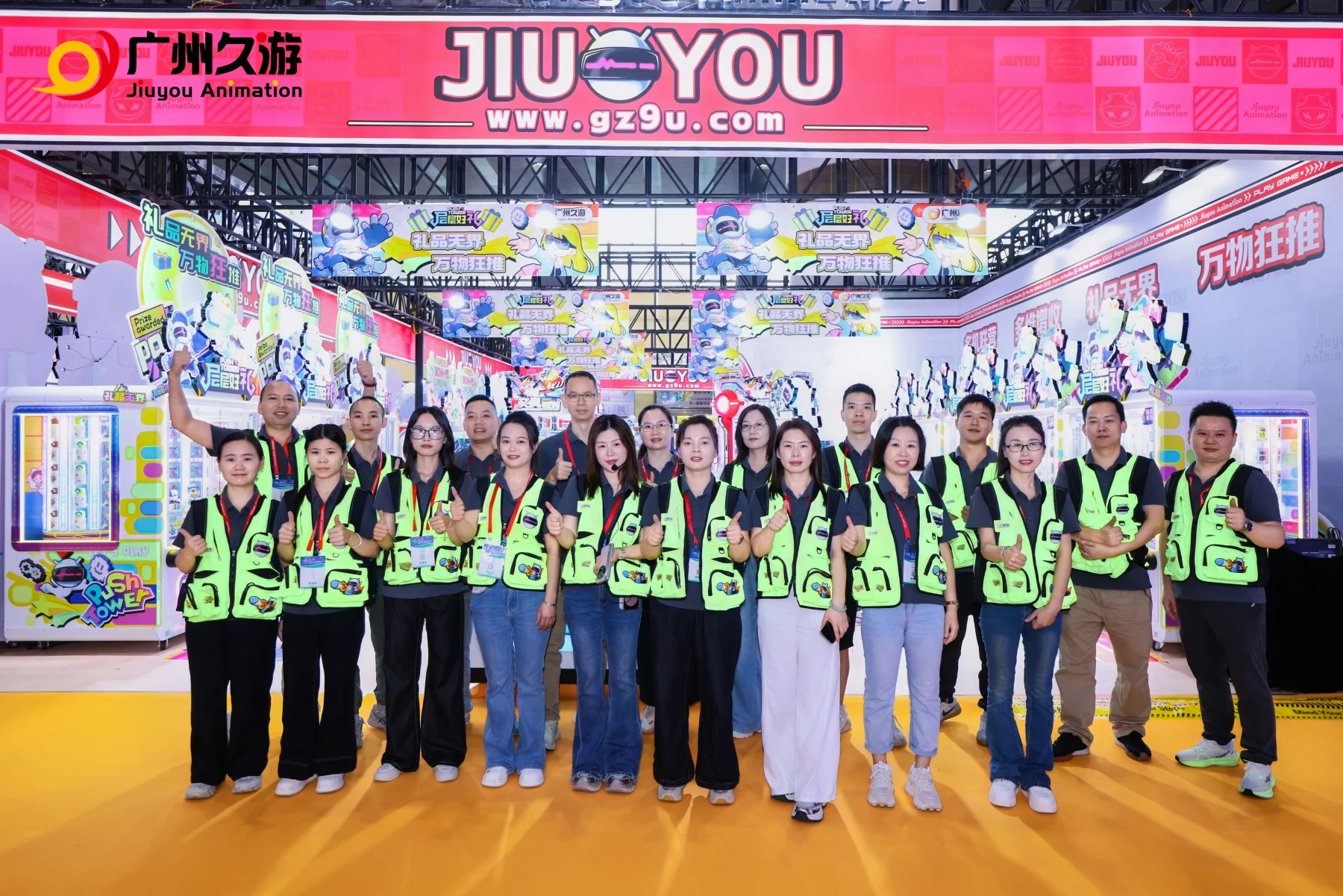
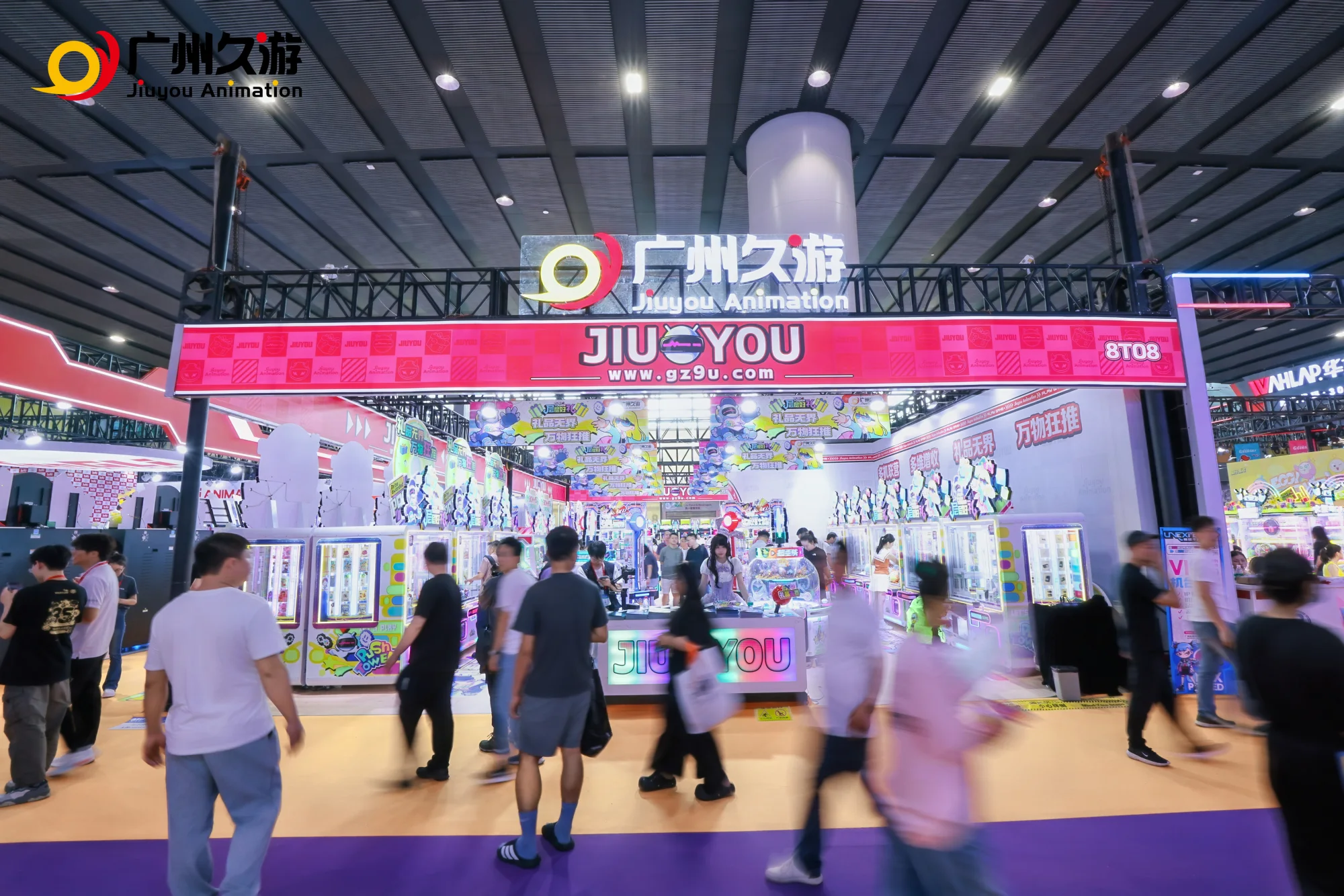
Push Tower and Ball Tower are two of Jiuyou's newest arcade machines. We showed both publicly at GTI Guangzhou 2026.
One is a direct-prize merchandiser. The other is a ticket redemption game. They look different, but the starting point behind both is the same:
A player should be able to understand the basic action before spending anything.
On a busy arcade floor, players often decide whether to stop after watching for only a few seconds. A visible prize, a clear target and an easy-to-follow action reduce the amount of explanation needed from staff.
Push Tower and Ball Tower at a glance
| Buyer question | Push Tower 1 Player | Ball Tower |
|---|---|---|
| Game type | Direct-prize merchandiser | Ticket redemption game |
| What the player does | Selects a height and times one push | Presses the button to launch the ball |
| Main reward | A physical prize | Tickets or e-tickets |
| What attracts attention | Five rotating prize levels | Visible ball movement, ticket holes and top wheel |
| Main operator control | Five level thresholds using one shared payout pool | Ticket bonus, mercy-ticket and top-stage payout control |
| Best starting question | What prizes and play price will you use? | How does your venue manage tickets and redemption prizes? |
Push Tower: five prize levels in one compact cabinet
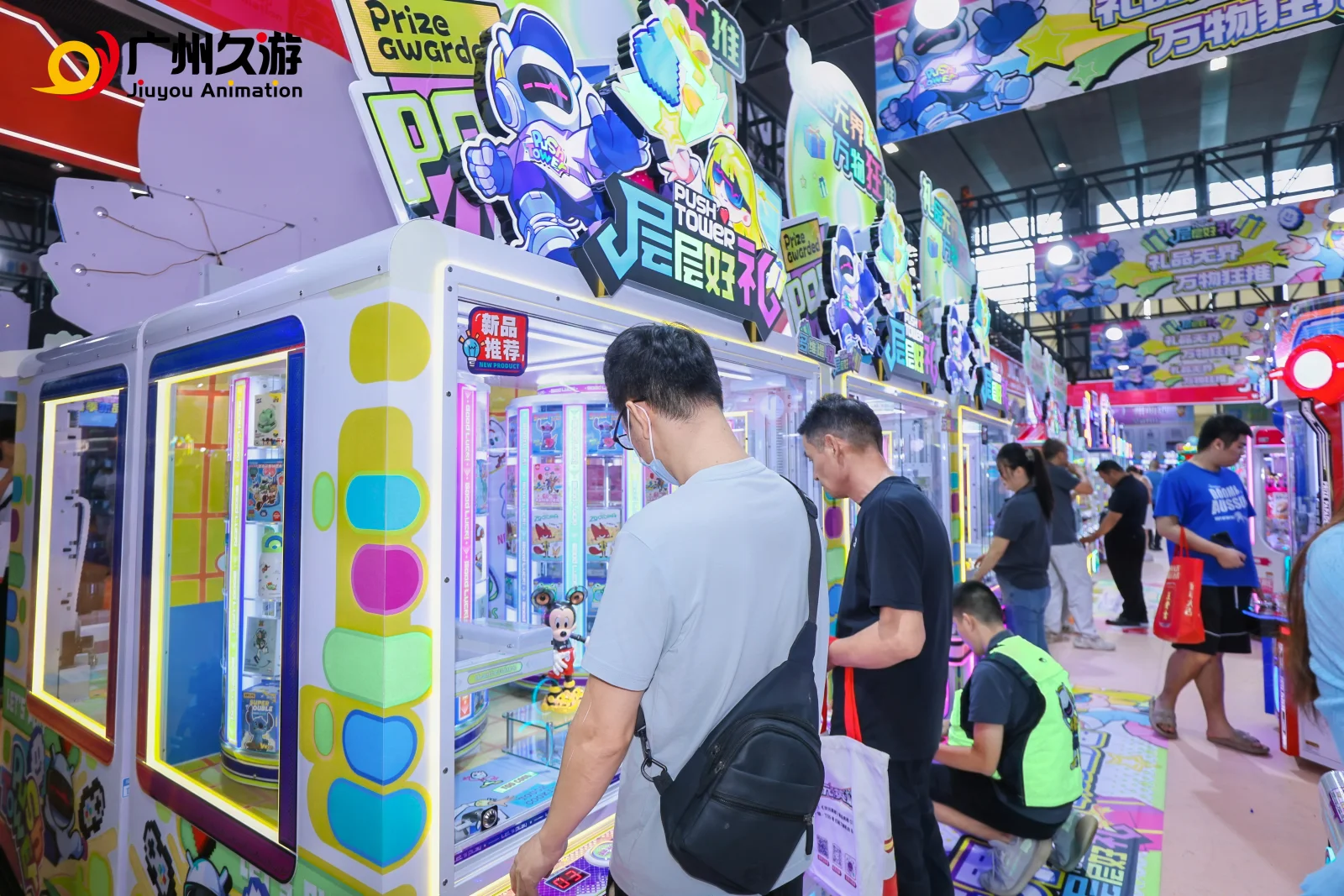
Push Tower 1 Player is built around a simple decision. The player chooses a prize level with the joystick, waits for the selected prize to rotate into position, and presses the button. The pusher moves forward once. If the prize drops into the chute, the player wins it.
The player does not need to aim left or right. The visible choices are the prize, the height and the timing.
Different levels can carry different prize values
The five rotating levels allow an operator to merchandise several prize values in one cabinet. Lower levels might carry lower-cost items, while another level can carry blind boxes, small electronics or other higher-value gifts.
The single-player cabinet has about ten positions per level—approximately 50 positions in total—but actual capacity depends on prize size, shape and placement. A prize still needs to sit securely and move cleanly during play.
This is the practical benefit:
One compact prize machine can present several prize-value tiers without treating each level as a separate cabinet.
Five thresholds, one shared payout pool
Each level can use a different payout threshold, but the levels share one accumulated coin count. For example, if the thresholds are set at 10, 20, 30, 40 and 50 coins, a shared count of 20 means the first two levels have reached their conditions.
That does not guarantee a prize. The player still needs to select the right height and press at the right time. If the player misses, the accumulated count remains. It resets only after a prize is actually won.
For an operator, the important question is not simply how many shelves the machine has. It is whether the prize mix, play price and threshold settings make sense together.
Ball Tower: visible ball movement with three possible results
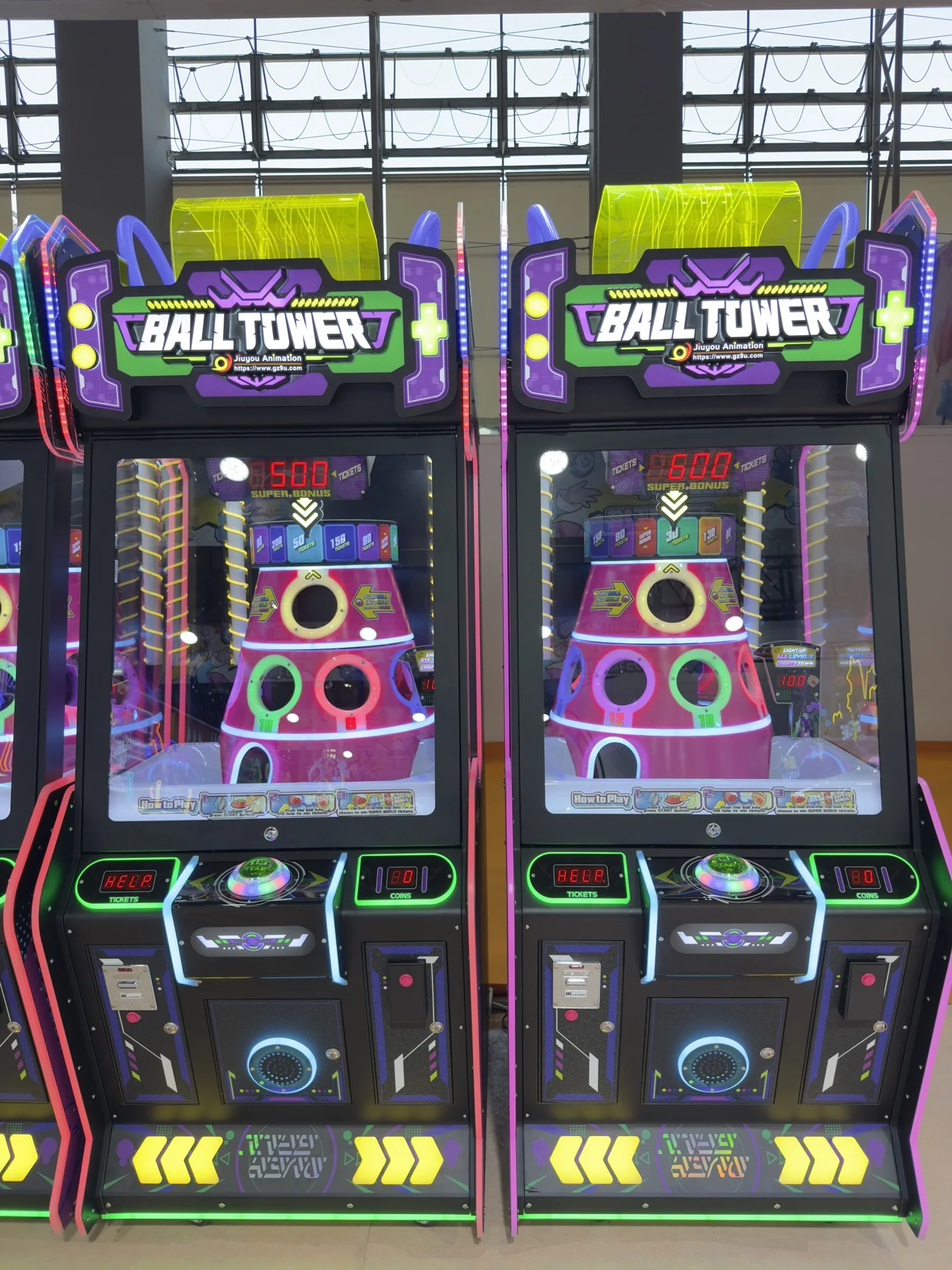
Ball Tower begins with one clear action: the player presses the button and launches the ball upward.
From there, the cabinet shows three layers of progress:
- The ball can land in one of eight regular ticket holes.
- The corresponding progress lights build toward an additional eight-light bonus.
- If the ball passes the middle section, it can reach the top ticket wheel.
The regular holes use fixed values of 5, 8, 10 and 12 tickets, with each value appearing twice. The eight-light bonus is adjustable, and the top wheel includes regular ticket awards plus a SUPER BONUS that can be set up to 2,000 tickets.
The printed ticket values are only part of the payout structure
The regular hole values are fixed, but the operator still controls important parts of the wider ticket economy. The eight-light bonus can be adjusted. A mercy-ticket function can be enabled and set if the venue wants a minimum award; it is off by default. The program can also manage how often the ball has the opportunity to reach the top-wheel stage.
This distinction matters. The SUPER BONUS is not controlled by a simple, separate win-percentage setting. The machine manages access to the top stage as part of the overall payout structure.
Ball Tower can be prepared for physical tickets or an e-ticket system, so the final setup should match the venue's existing redemption operation.
What buyers asked at GTI Guangzhou 2026
Visitors generally understood the basic play after watching the machines. The longer conversations were about operation.
For Push Tower, buyers asked about prize value, capacity and how the five level settings work together. For Ball Tower, the conversation often moved quickly from “How does it work?” to “How do I set the tickets?”
That second question produced some of the most useful discussions at the show. Operators from different markets wanted very different ticket payouts. Some wanted more tickets; others wanted much less. Neither answer was automatically right or wrong.
A redemption game does not operate in isolation. Its payout has to fit the local play price, redemption-prize cost, the venue's ticket economy and what local players are used to. A setting that works for one family entertainment center may make little sense in another market.
Which machine fits your venue?
Choose the operating model before comparing the visual style.
Push Tower is the stronger fit when:
- physical prizes are an important part of the venue;
- players should be able to see several prize values in one cabinet;
- staff can refill and arrange prizes consistently; and
- the operator wants separate level thresholds managed through one shared payout pool.
Ball Tower is the stronger fit when:
- the venue already runs a ticket-redemption counter or e-ticket system;
- visible movement and progress are important on the floor;
- the operator needs payout settings that can be adapted to the local ticket economy; and
- staff are already prepared to monitor tickets, balls and normal moving-part wear.
Simple player instructions do not mean simple operating decisions. The player only needs to understand what to do. The operator needs to understand how prize cost, ticket value, payment preparation, refill work and payout control fit the venue.
Availability and configuration
Push Tower and Ball Tower are available for overseas projects, with configurations confirmed for the destination market.
Push Tower is currently focused on the single-player export model. Ball Tower can support physical tickets or e-tickets. Card-reader preparation is available for both machines, while prize setup, payment-system preparation, ticket settings, voltage and other market requirements should be confirmed before production.
If you are evaluating either machine, tell us how your venue operates: the play price, prize or ticket system, payment method, floor space and the type of players you serve. We would rather discuss the real setup than recommend one configuration to every market.